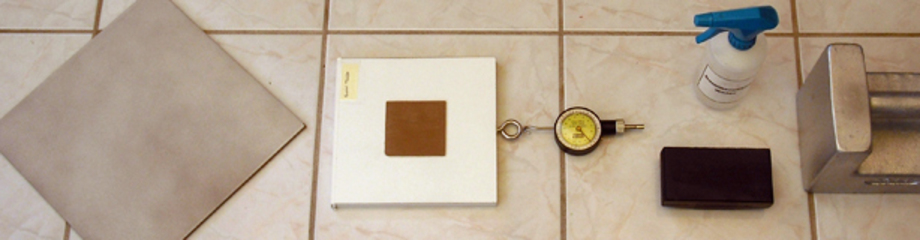

The ASTM C 1028-07 is NOT a valid test for measuring slip potential of flooring...
ASTM C 1028 has been officially withdrawn, with no replacement, in 2014 by the ASTM. There are no plans to resurrect this poor test method for measuring wet static coefficient of friction (SCOF). The days of looking to achieve a 0.60 for level floors and a 0.80 for ramps is now officially over. Here is some information on currently valid slip test methods. The latest ASTM test for measuring the slip resistance of a floor is the newly-revised ASTM E303-22, which is backed by 50 years of international research in at least 50 nations. All this research into actual slip and fall accidents and extensive laboratory research has led to detailed safety criteria for ASTM E303 test results. Here's where you can get reliable ASTM E303 testing done, either in the lab or in the field.
The ASTM C 1028-07 static coefficient of friction test is widely recognized to be inappropriate for assessing pedestrian safety. It can give "safe" ratings to very slippery materials. This weakness is recognized in writing by Ceramic Tile Institute of America, Tile Council of North America, and the University of Southern California Medical Center Biomechanics Department, as well as being known by forensic experts worldwide:
1. Ceramic Tile Institute of America (CTIOA) in 2001 explained the weaknesses of the ASTM C 1028 method and endorsed the pendulum as a primary standard, with the Tortus secondary. The endorsement from ctioa.org states, "These portable tests are intended to replace the horizontal pull-meter test, American Society for Testing and Materials Method C 1028-96, that U.S. ceramic tile manufacturers currently use for field testing of their products."
2. Eric Astrachan, Executive Director of Tile Council of North America, stated in his article "Updates to an American Method for Measuring Coefficient of Friction" that dynamic friction is important in assessing safety. Static coefficient of friction (measured by the ASTM C 1028) does not properly measure slip potential for flooring.
Eric Astrachan also stated in his article (above) that there are "common requests for tile with a static COF [using ASTM C 1028] of 0.6 or better (which) stems from a now outdated ADA Access Board document in which a 0.6 static COF recommendation was made. Commonly misunderstood, this document never set a requirement and has now been withdrawn. The United States Access Board subsequently published a document called "Bulletin #4: Ground and Floor Surfaces" that clears up much of the confusion about this issue and which has no [static] COF recommendation or requirement."
Other devices such as the American Slip Meter ASM 825A and the "James Machine" also assess static coefficient of friction and they are subject to the same risks and drawbacks as ASTM C 1028. These should NEVER be used to assess pedestrian safety in the wet or otherwise lubricated condition.
(This webpage was last updated in April of 2023...be careful of old information!) The ASTM C1028 test was essentially replaced with ANSI A326.3, which is an easy-to-pass DCOF tile slip test promoted by the TCNA to help American tile manufacturers sell slippery tile. Don't be fooled by "tile councils" who work for the tile industry. ANSI A326.3 is just another TCNA test that should never be relied upon to assess the real-world slip resistance of a floor.
This video helps explain one of the major problems with the C1028 slip resistance test and shows reliable coefficient of friction testing methods...
Valid professional, certified, engineer-stamped floor slip resistance testing services and information on making floors anti-slip are available at SafetyDirectAmerica.com.
The below video shows the latest ASTM slip resistance test for floors and roads, based on 50 years of international research. The test method was updated in June of 2022, and it is ASTM E303-22.
 Print
Sitemap
Print
Sitemap
Visit SafetyDirectAmerica.com for reliable, certified floor slip resistance testing. C1028.info © 2018. All Rights Reserved.